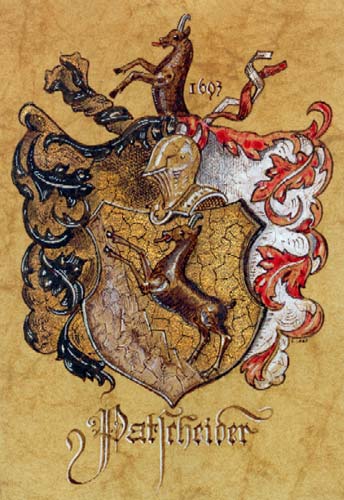
Chamois coat of arm conferred Aug. 3rd, 1693
to Gabriel PATSCHEIDER born Feb. 7th, 1637
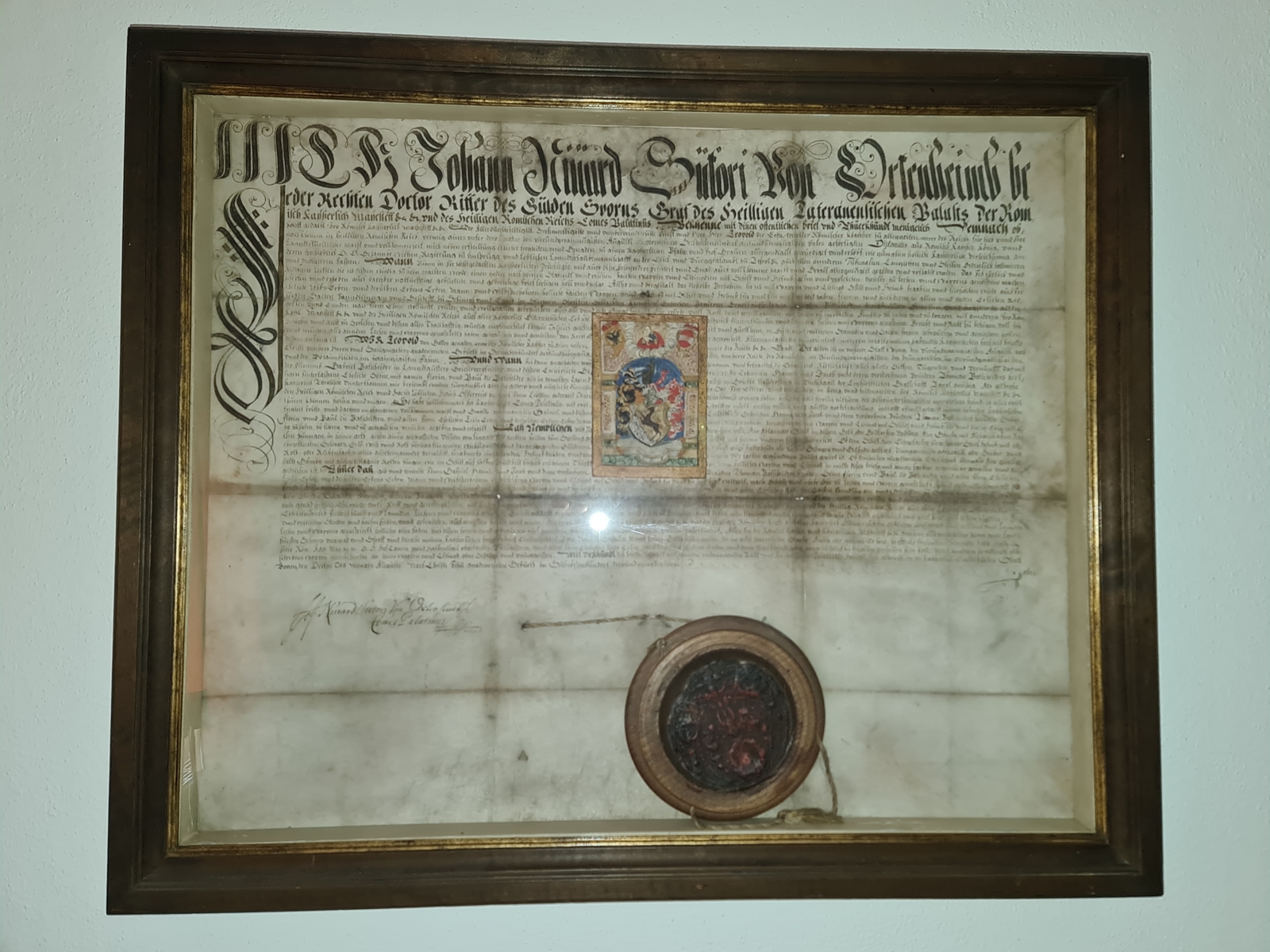
The Gamswappen coat of arms document has always been passed down directly from Gabriel PATSCHEIDER, from father to
first-born son, all the way to me. According to Dr. Richard Patscheider in "Vom Oberrhein zum Etschquellraum"
(published in 1967 by Verlag Robert Lerche, Munich), my father Irimbert, and therefore I as well, are entitled to this coat of arms document.
The document specifies that Gabriel Patscheider, his brothers Hans and Jakob, and the descendants of his deceased brother Thoman are
entitled to bear the coat of arms for all time. This applies to both male and female descendants. I have highlighted this passage in bold in the original text of the
document below.
For many years, the original coat of arms document was kept in Germany by Harold Patscheider. I wish to express my sincere and heartfelt
gratitude to Harold for his long-term care, careful preservation, and conservation of the document, which my father and I only collected from Herne, Harold’s former
place of residence, in 1991. The coat of arms document now hangs in a place of honor in our living room. It is a framed historical document (approx. 80cm x 65cm)
with an original wax seal about 15cm in diameter, showing the coat of arms at its center, surrounded by the following artistically designed text:
Below is the original text of the heraldic letter:
(Please note that it is written in an old form of the German language and cannot be translated)
"Ich Johann Niuvert Sutori von Ortenheimb beeder Rechten Doctor Ritter des Güldnen Sporns Graf des Hl. Lateranensischen
Palasts der Römiech kayserlichen Mayestett und des Hl. Römischen Reiches Comes Palatinus bekhenne mit dieasm offentlichen brief
und Thue kundt meniglich ~ Demnach ob höchstgedacht Iro Römisch Kayßerliche Mayestett und der aller durchleichtigste großmächtigsete und
unyberwindlichste Fürst und Herr Leopold der erste, erwölter Römischer Kayßer zu allenzeiten merer des reichs für sich und Ire nschkommen
im Hl. Römischen Reich vermig eines unter dero signatur - 24. VIII. 1678 - geförtigten. Diplomatis aus Römisch Kayser König und
Landtfürstlicher macht und vollkommenheit mich neben erteilung etlicher Freyheiten und Genaden zu einem Kayßerlichen Pfalz. und
Hofgrauen allergnedigist gewürdiget und erhöht wie zumalen soliche Kayßerliche verleihung an deren hochlöbliche Gehaimbe ... Regierung zu
Ynsprugg und lobliche Landshauptmannschaft an der Etsch und Burggrafenambt zu Tyrol und auch allen andern Tribunalien, Kanzleyen und
Stellen ordentlich intimieren und publizieren laßen / Wann nünn in Ihr höchstgedachten privilegio ... Macht und Gwalt allergnedigist
erteilt worden: daß ioh erlich und redlichen leithen ... einen jeden nach seinem stand und weeßen Zaichen, wappen und Kleinodien mit Schilt
und Helmb geben und verleihen, dießelben zu lehens- und wappengenossen machen, schöpfen und erhöben auch daryber nottürftige gebürliche und
gebreichige brief fertigen soll und mige ... mereren Inhalts meines habenden Kayserlichen Freyheitsbriefs, dessen Anfang ist / Wir Leopold von
Gottes Gnaden erwölter Römischer Kayßer zu allen zeiten merer des Reichs &&& und dessen Ennd: der geben ist in Unserer Statt Wienn den
24. VIII. n. Chr. 1678 Unserer Reiche, des Römischen im 21. des Hungarischen im 24. und des Behaimbischen im 20. J. / Und wann ich dann
angsöchen, wargenommen und betrachtet die Erbarkeit, Redlichkeit und guette Sitten Tugenten und Vernünft, darmit der fürnemb Gabriel
Patscheider in Lanndtäufers Gerichtsverpflichter und dessen eheleibliche Gebriedere die Ehrsamen Hans und Jakob und deren verstorbenen
Brueders Toman Patscheiders ßeelig hinterlassenen eheliche Söhne mit Namen Florin und Paul, die Patscheider alle im bemelten Landtaufers
Gerichts Naudersperg im Vintschgau der Ertzfürstlichen Grafschaft Tyrol ansessig als gethreye Kaiserlich Tyrolische Untertanen mir beriembt
worden, fürnemblich aber die gethrey und nützliche Diensten so Sye Ire Eltern und Voreltern in Krieg und Friedenszeiten Iro Röm. K.
Mayeatet dem Hl. Röm. Reich und Höchstlöblichen Hauß österreich nach iren Crefften yederzeit treygehorsamist erwisen haben, ßolliches
noch fürohin zu tuen untertänigist erbötig sind, es auch wohl thuen kinnen, ßollen und migen, So habe solchem nach Ich Kays. Comes
Palatinus mit wolbedachtem Muot vorbemelten Gabriel und dessen eh. Brüeder Hans und Jakob und deren verstorbenen Brueders Toman
ehelichen Söhne Florin und Paul Iren ehelichen Leibeserben und derßelben Erbens Erben, Mann und Weibspersonen hernach beschriebenes
Vappen und Kleinod mit Schilt und Helmb für und für in ewige zeyt also zu haben zu füeren und gebrauchen verliehen .. undoerteilt: ...
ein Ablanger Schilt, in dessen gelb oder goldfarben Veldung ein Gambs mit Außgeschlagener Roten Zungen in seiner Art gegen einen
geschröffelten Velsen von linker zur rechten Seiten zum Sprung geschickt mit selnen hinteren Füeßen sich erhebt - ob dem Schilt ein
eisenfarben zuegetaner Stechhelmb mit ob eingeflochten schwarz gelb weiß und rot zurückfliegenden Wicklpandl und daran hangenden
Kleinod- auch beederseits als rechter schwarz und gelb oder goltfarb, linggerseits aber weiß oder silber und rot oder rubinfarb
zierlich durcheinander vermischt herabwerts einfallenden Helmdecken und von solichen 4 farben gewundenen Pausch geziert ist -
ob demselben zuegetanen Stechhelmb abermals ein gleichgestalte Gämbs mit ausgeschlagener Roten Zungen ... Wie denn ßollichea inmitten
dises briefs ... gemalen und ausgeetrichen ist. Thue daß gib und verleihe Ihnen ... obbeschriebenes Wappen mit Schilt und Helmb für
und für ... erhebe sie zu lehen und Wappengenoßheit hiemit wißentlich incrafft diß briefs ... alles bei der Röm. K. Mayestet und unsers
Herrn und Landtfürsten schwerer Ungnad und straf ... einverleibte poen: 60 Mark lefigs Golts, die ein jeder so oft er freventlich hiewider
tete bezalen solle Halbs in Iro R.K. Mayestet hofkammer und halbenteil obgedachten Patscheidern ...Mit Urkundt diß briefs beßigelt mit
meinem anhangenden Papst- und Kayßerl. Palatinats Inßigl der geben ist in der Kayßerlich Ertzfürstlichen Statt Botzen, den Dritten Tag
Monats Augusti 1693."
Comment:
Dr. Richard Patscheider had faithfully transcribed the text from the coat of arms document at the time and published it in his book "Vom Oberrhein
zum Etschquellraum". Apparently, even he could not decipher all passages; these parts are filled with dots. I have reproduced this text from the book here.
The coat of arms document clearly shows that all descendants of Gabriel Patscheider, as well as his brothers Hans and Jakob, and also the descendants of
his deceased brother Thoman, are entitled to bear the coat of arms for all time. This applies to both male and female descendants.
Whether I am actually the first-born male descendant of Gabriel Patscheider can be doubted. When the family tree is
examined more closely, several others could also be considered.